





A personal introduction from Kate
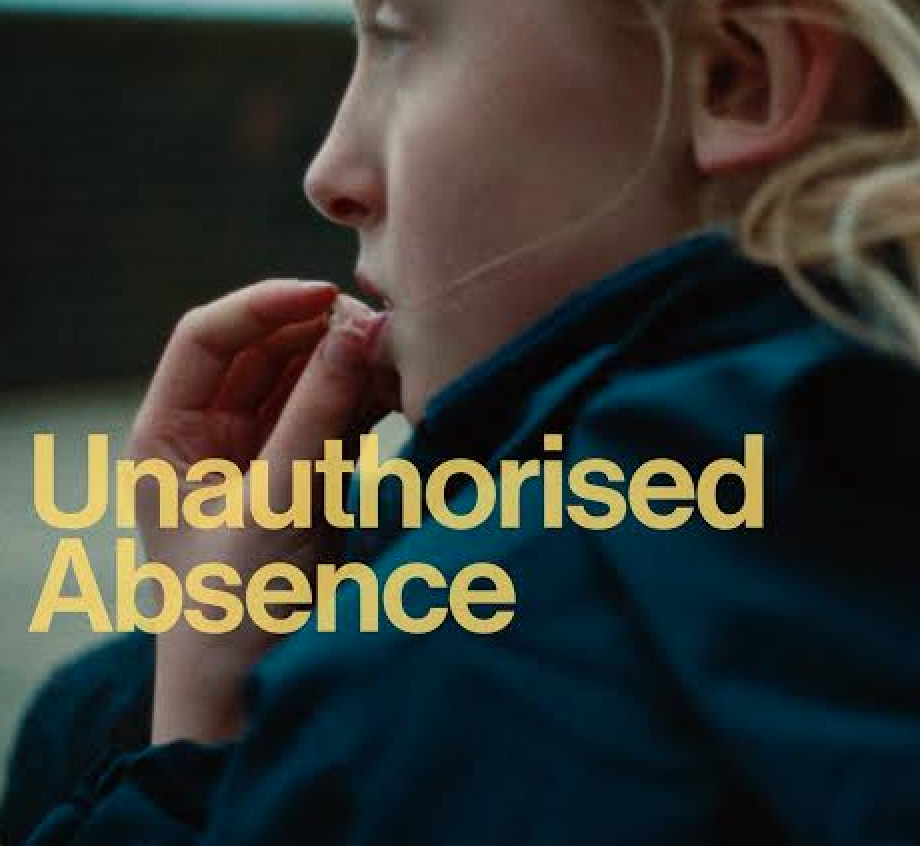
After watching the powerful short film Unauthorised Absence, our wonderful team member Laney has bravely decided to share her own family's experience of school-related distress. It's a moving story about her son J, the challenges they've faced and the importance of truly listening to children and their families.
Laney joined Tales Toolkit in 2023, and I honestly couldn't imagine the team without her. She's absolutely brilliant at what she does, and over the years she's become not just a wonderful colleague, but also a friend.
During that time, I've seen what an incredible mum she is to J. She's an absolute powerhouse. She knows him inside out, understands what he needs and fights tirelessly to make sure he gets what he needs. I have so much admiration for her.
But I've also seen the enormous toll that fighting has taken. What really breaks my heart is knowing that, before I met her, this incredibly strong, capable and determined woman was made to question herself and her instincts as a mum, when all she was trying to do was what was right for her child. The Laney I know is someone who trusts her instincts and will fight with everything she's got for J, but it shouldn't have to be such a fight.
I often say how lucky J is to have her. And he really is. But it also makes me think about all those children who don't have someone who can fight their corner in the same way.
We need to listen to families and take their concerns seriously, even when what they're describing isn't what we're seeing ourselves. No child should have to reach crisis point before their struggles are recognised.
At Tales Toolkit, we believe so passionately in listening to children, understanding their emotions and recognising that behaviour is communication. Laney's story is such a powerful reminder of why this matters.
I'm incredibly proud of Laney, and so grateful she's sharing her experience. I hope you'll take the time to read it, because every child deserves to be listened to, understood and supported.
Kate
Founder, Tales Toolkit
When a Child Can't Go to School: My Family's Story
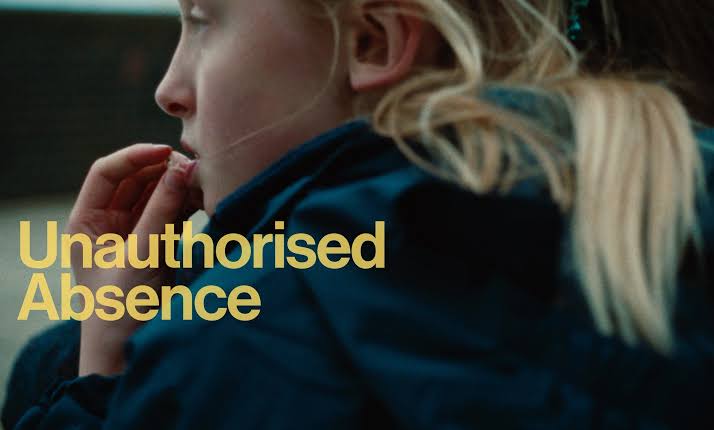
Tuesday, I watched Unauthorised Absence, a powerful short film exploring emotionally based school avoidance (EBSA) and the devastating impact school-related distress can have on children and their families. I knew it would be emotional. I knew it would bring back memories and feelings I've spent years trying to process. But I wasn't prepared for just how close to home it would hit.
Because for some of us, this isn't just a film. It's our lived experience.
And it's a film I'd encourage every teacher, SENCO, early years practitioner and education professional to watch. Not because I believe teachers are to blame, but because I believe understanding can change lives.
"He's absolutely fine once you've gone"
My son, J, hasn't attended school since November 2022.
Looking back, his difficulties really began when he entered Year 1 in September 2021. Interestingly, this coincided with the move from the more play-based Early Years Foundation Stage to the increasingly structured environment of Key Stage 1.
J was subsequently diagnosed as autistic, but at the time, we didn't fully understand why school was becoming so difficult for him. And I certainly didn't understand masking!
Getting J into school was heartbreaking. There were mornings when several teachers had to physically peel him off me at the gate. Yet I was told almost daily, "He's absolutely fine once you've gone."
But what people didn't see was what happened outside of school. The meltdowns when he got home. The evenings when he couldn't face eating his dinner. The difficulty sleeping, and the night terrors when he eventually did. Then waking up the following morning, battling to get him dressed, too anxious to eat breakfast, an incredible struggle to get out of the door. And this pattern repeated, day after day.
I now understand that J was masking his distress whilst at school.
Some autistic children work incredibly hard to suppress their emotions or meet the expectations placed upon them throughout the school day. They may appear settled, compliant or even happy, but that doesn't necessarily mean they're coping.
For some children, the enormous effort of holding everything together means they fall apart once they reach the safety of home. Often described as “the coke bottle effect.”
A child appearing fine at school doesn't mean they are fine. And a parent describing distress at home isn't contradicting what a teacher sees in the classroom.
Sometimes they're simply seeing different parts of the same struggle.
“I was told I was the problem”
There's a moment in Unauthorised Absence when the headteacher asks the mother whether anything is happening at home that might explain her daughter's difficulties. The mother responds that the problem isn't at home. It's at school.
That moment really struck a chord.
Because I remember one particularly distressing school drop-off, 11 December 2021 when I was told that I was the problem.
Those words have stayed with me.
I was already questioning myself every day. Was I doing the right thing? Was I making things worse? What else could I possibly do? I was approaching 4 months of this. Being told I was the problem only added to that guilt and helplessness.
Of course, understanding a child's home circumstances can be important. But we shouldn't automatically assume that difficulties with school attendance originate at home. Sometimes home is simply where a child feels safe enough to express their distress.
When the right support made all the difference
Following that experience, I moved J to a smaller, more nurturing school. And over time things improved enormously. The difference wasn't that J suddenly became less anxious. It was that the adults around him recognised his needs and adapted their approach.
He was given autonomy, his anxieties were acknowledged, and he was never physically pulled away from me. He started on a reduced timetable, increasing his hours when he felt ready. He was greeted by the same teacher each morning, and if that teacher wasn't available, I was informed so we could make a plan. Visual timetables helped him understand his day. No matter how many times he asked when Mummy was coming back, he was answered and reassured by the trusted adult voice. Adjustments reduced transitions, including allowing him to eat lunch in his classroom. The last 2 days of Year 1, J walked into school independently, just like the other children. He didn’t need to be met at the door.
It was an incredible transformation.
But when he returned for Year 2 in September 2022, the scaffolding that had helped him feel safe was no longer in place. Within six weeks, everything began to unravel. On 18 November 2022, after 2 weeks of distressing drop offs and return of the coke bottle effect in the evening, not sleeping or eating. He vomited with anxiety on that Friday morning, I didn't take him in and I withdrew him from school until a plan was put in place to support him - that plan never came!
One of the biggest lessons from our experience is that support shouldn't be removed simply because it's working.
Sometimes the very reason a child appears to be coping is because the right support is in place.
The impact reaches far beyond the school gates
One of the things Unauthorised Absence portrays so powerfully is the isolation.
Our world became incredibly small. Friendships were lost, family relationships changed, and people we thought would be there for us simply weren't. We didn't need everyone to have the answers. We just needed them to believe us, listen and show compassion.
But the impact wasn't only emotional.
Before J’s difficulties became so overwhelming, I had an established career as a civil servant, having previously completed eight years of military service. I had an exemplary record, was progressing through the grades and had good prospects for promotion.
I'd worked hard to build that career.
Yet as J's needs increased, balancing my professional responsibilities with supporting him became increasingly difficult. At one point, I even faced losing my job, having been referred for dismissal by a line manager who, in my experience, lacked empathy and understanding of our circumstances. Despite everything happening at home, I somehow found the strength to attend a panel and argue my case.
The panel decided in my favour, and I was permitted to move teams.
I desperately wanted to make it work. But six months later, with J no longer attending school and experiencing extreme separation anxiety and significant care needs, I simply couldn't continue juggling everything. I took an unpaid career break.
It meant stepping away from a career I'd worked hard to build, a significant financial loss for our family and additional pressure on my husband, who became our sole provider. And I know we're far from the only family to experience this. Parents reduce their hours, turn down promotions or leave employment entirely because their child needs support that cannot fit around a conventional working day.
School-related distress doesn't end at the school gates. Its impact can reach into every corner of family life.
How our journey connected me with Tales Toolkit
In October 2023, almost a year after J stopped attending school, I started working for Tales Toolkit. I'd spotted an advertisement for a work-from-home role and thought I'd apply.
Three years later, I'm still here.
The flexibility has been invaluable. Some days I'm working from a farm while J takes part in animal-based learning. Other days I'm logging on late in the evening. My working day doesn't always look conventional, but that doesn't stop me doing my job. And importantly, I genuinely believe in the Tales Toolkit approach.
Having experienced firsthand what can happen when a child's needs aren't understood, I place enormous value on approaches that recognise children as individuals and give them opportunities to communicate, create and learn in ways that work for them.
J's difficulties became increasingly apparent as he moved away from play-based learning and into a more formal classroom environment. Of course, play-based learning isn't a solution to every difficulty. But I do wonder how different some children's experiences might be if we placed greater value on flexibility, creativity and emotional safety.
Through Tales Toolkit, I see how storytelling, visual supports and child-led approaches can offer children different ways to express themselves. Not every child can easily tell us what they're feeling. Some communicate through play. Others through behaviour, movement, creativity or stories. And sometimes, what looks like challenging behaviour is a child trying to communicate something they don't yet have the words to explain.

The impact doesn't end when school attendance stops
Eventually, we secured Education Otherwise Than At School (EOTAS) for J. He now accesses an individualised education through tutoring, therapeutic support, creative activities and community-based learning. Slowly, at his pace, we're beginning to see glimpses of the happy, curious little boy who became lost amongst so much distress.
He's making progress, and I'm incredibly proud of how far he's come. But don't mistake that progress for recovery.
J continues to experience extreme separation anxiety. Even now, being apart from me can trigger overwhelming panic, sometimes to the point of physically vomiting. Years after he last attended school.
The impact doesn't simply disappear when a child is removed from an environment they found distressing. Rebuilding a child's sense of safety and trust takes time, patience and understanding. And that's why recognising distress early, listening to children and families, and responding appropriately matters so much.
A request to everyone working with children
I want to be clear that I'm not sharing our experiences because I believe teachers are responsible for everything that went wrong.
I know there are wonderful, compassionate educators who work tirelessly to support children. I also recognise the enormous pressures schools face, from attendance expectations and limited resources to increasing SEND needs. Parents and teachers can find themselves navigating the same difficult system from different sides.
That's why films like Unauthorised Absence are so valuable.
They offer an opportunity to see things from another perspective, question assumptions and consider what might be happening beyond the classroom.
If you work in education, I'd really encourage you to watch it. Perhaps share it with colleagues, your SENCO or discuss it during a staff meeting.
And afterwards, consider:
- When a child struggles to attend, are we looking beyond attendance figures to understand why?
- When a parent describes distress at home that we don't see at school, are we taking that seriously?
- Could a child who appears settled actually be masking significant distress?
- Are we maintaining the adjustments that have helped a child succeed, rather than assuming they're no longer needed?
- Are we giving children opportunities to communicate in ways that work for them?
There won't always be easy answers. But those conversations matter.
I'm incredibly grateful to Jo Clayton and everyone involved in creating Unauthorised Absence, and for giving a voice to children and families who have felt misunderstood, blamed or unheard.
We are fortunate that J is now accessing an education that works for him. But our journey is far from over. He's still living with the consequences of his earlier experiences, and as a family, so are we.
If sharing our story encourages even one person to look at a struggling child or family through a different lens, then it's worth sharing.
Because these aren't simply children who won't go to school.
They're children who, for many different reasons, can't.
And every one of them deserves to be listened to, understood and supported.
Watch Unauthorised Absence
We encourage everyone working with children and families to watch Unauthorised Absence, reflect on the experiences it portrays and consider how we can better understand and support children experiencing school-related distress.
With thanks to Jo Clayton, Georgia Parris, Natalie Lauren and everyone involved in bringing Unauthorised Absence to life.