




Written by Sue Meikle
There is a lot of talk at the moment about oracy and implementing oracy into the EYFS and national curriculum.
WHAT IS ORACY?
There are four strands of oracy:
- Physical – How we speak (voice, tone, pace, gesture, posture, volume)
- Linguistic – The words we use (vocabulary, grammar, sentence structure)
- Cognitive – What we say (ideas, reasoning, explanations, comprehension)
- Social and Emotional – How we engage (turn taking, empathy, confidence)
TALES TOOLKIT IS A GREAT RESOURCE TO SUPPORT ORACY IN THE CLASSROOM
WHY?
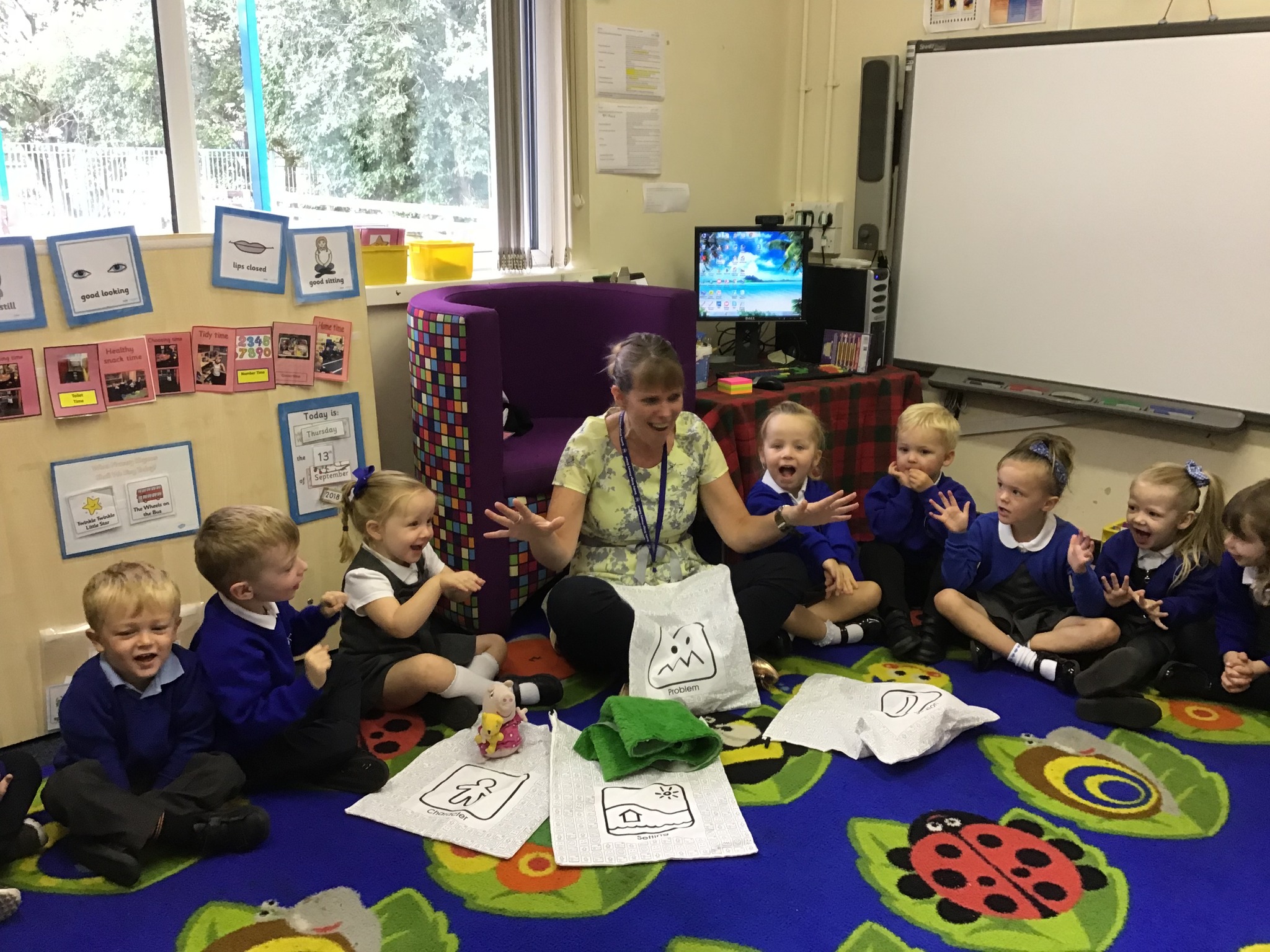
In short, Tales Toolkit supports the oracy framework through story-telling, play, creativity, language enrichment, narrative and imagination. Tales Toolkit covers EVERY area highlighted in the framework in one neat, child-friendly package.
IDENTIFYING THE FOUR STRANDS OF ORACY USING TALES TOOLKIT
1. PHYSICAL
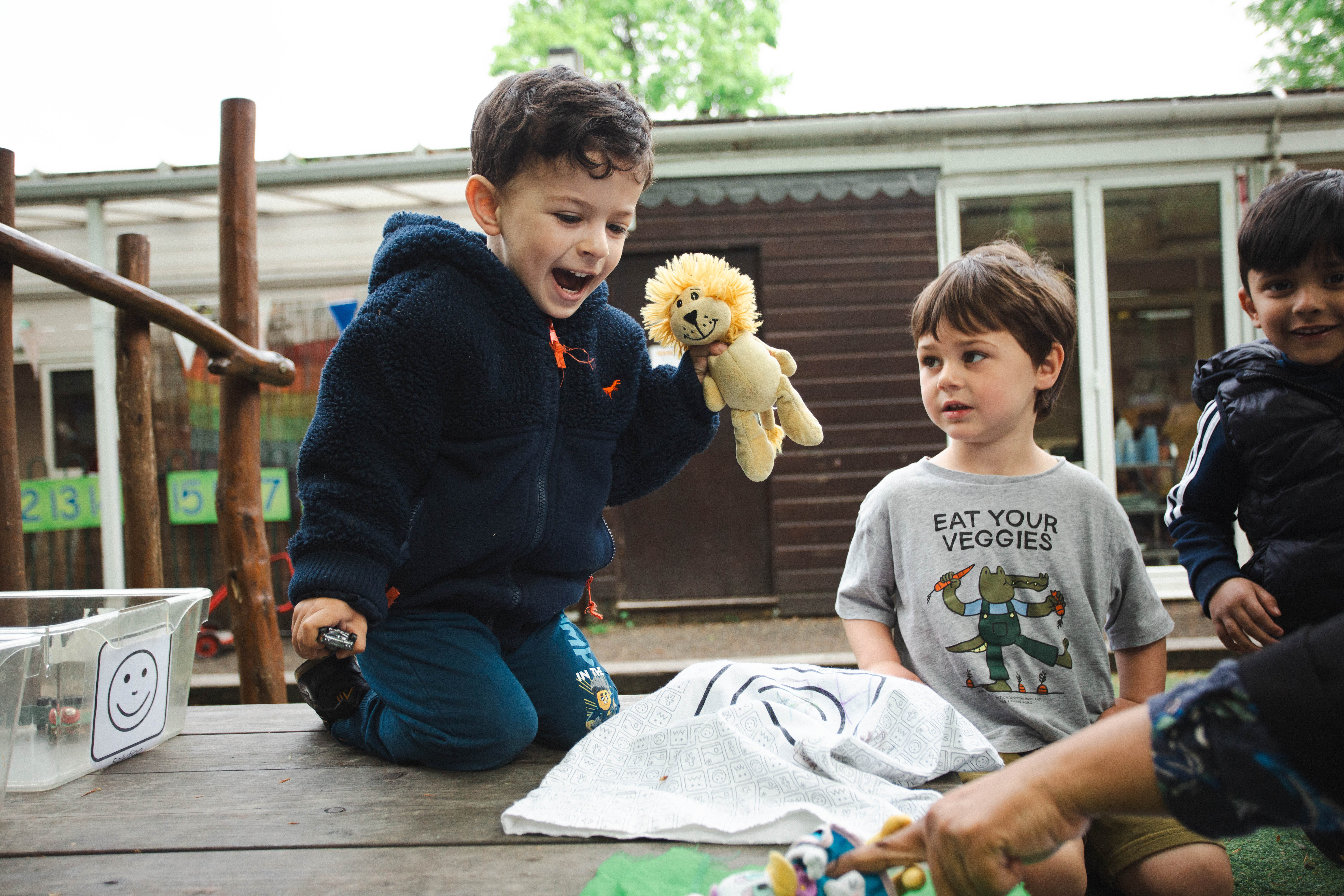
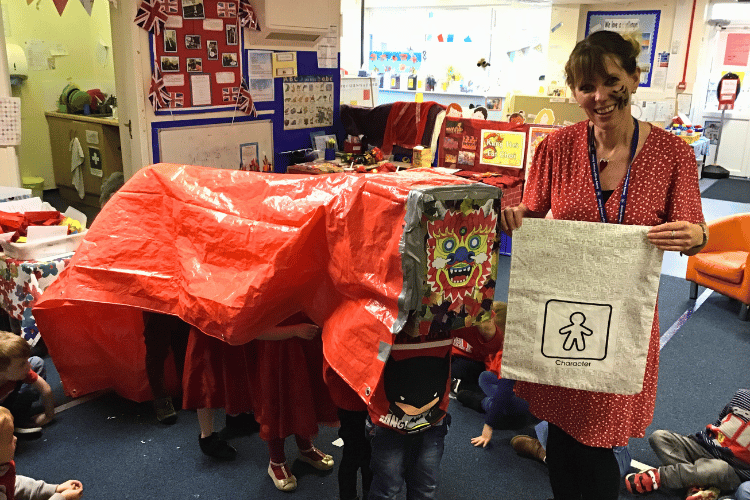
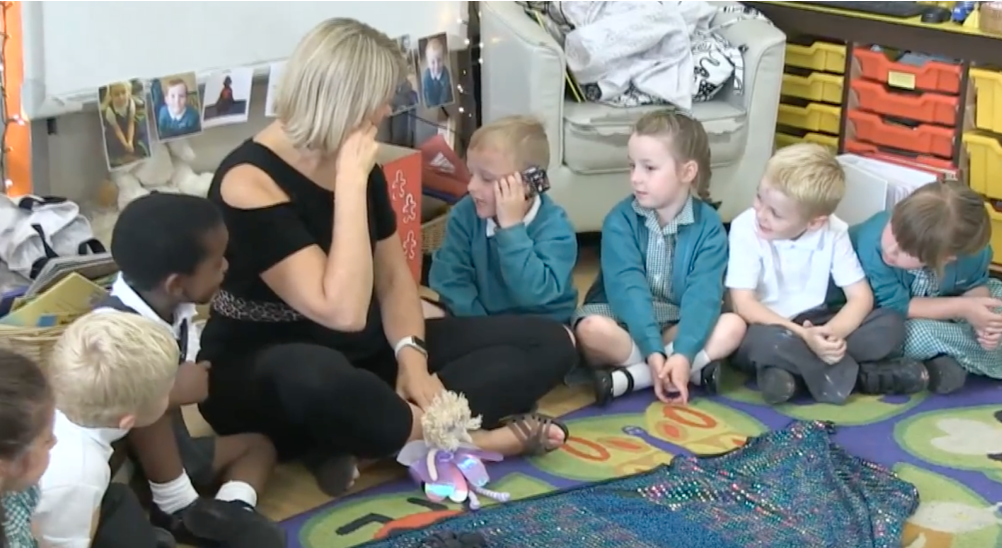
Tales Toolkit allows children to voice new words and ideas. We can use the toolkit to put physical actions to words and sentences e.g., “The frog jumped and jumped!” (crouch down and jump up high). We can use it to add voice to a character e.g., a gruff tone for a wolf and a high-pitched tone for a fairy. We can make character voices loud whilst we stand tall and make ourselves big. We can make our voices and ourselves small. We can roar. We can whisper. We can tell parts of a story with speed e.g., “… and the hare ran and ran as fast as she could!” or we can slow it all down e.g., “… but … the … tortoise … plodded … sloooooooowly … plod … plod … plod!” We can incorporate as much gesture and expression as we choose.
2. LINGUISTIC
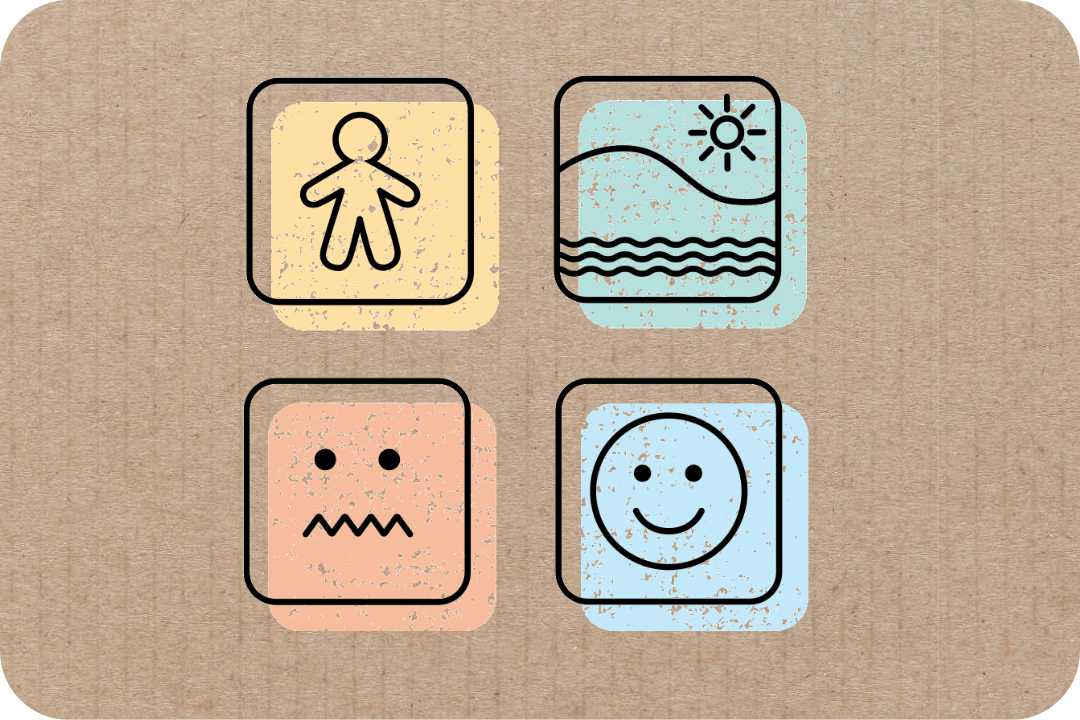
Tales Toolkit introduces children to new vocabulary and allows them to play with words. It encourages putting actions to words and songs to stories, all of which support developing, learning and retaining new words. Tales Toolkit provides space for children to hear sentence structures and promotes all areas of talking. Tales Toolkit hugely supports ‘Narrative Development’ (a speech and language therapy approach written by Bec Shanks) by incorporating WHO, WHERE, WHEN and WHAT HAPPENED NEXT? which is the language required for conversation.
3. COGNITIVE
Tales Toolkit allows the children to express ideas both verbally and physically. It gives space for ‘working things out’ and reasoning. It allows space for a child to construct and offer explanations. Tales Toolkit is a brilliant resource for developing comprehension and provides opportunity for children to practically follow and understand information-carrying words. Tales Toolkit is a great resource to support children by engaging in conversation, discussion and problem solving.
4. SOCIAL AND EMOTIONAL
Because Tales Toolkit has a core value of childhood and play, it actively engages children in turn taking – not just verbally and physically, but also in giving value to other people’s thoughts, ideas and contributions, thus teaching empathy.
As well as incorporating ‘themselves’ into their stories and changing their own narrative, Tales Toolkit can also be used as a resource for ‘empathy swapping.’ By using a character as a ‘problem’ (one of the story-telling features), children are able to work out a solution, whilst considering ‘the problem’ from a different perspective.
The toolkit is also a great mechanism for challenging stereotypes. Tales Toolkit gives children the freedom to put forward their own ideas and let their imaginations flourish.
And something that I feel is of prime importance is confidence. Tales Toolkit provides a platform for participation, trying out new words, playing with and sharing ideas, and it provides an activity where ALL ideas are worthy! If a child sees value in their ideas and in what they say, they’ll be more likely to share them again and again and again.
Confidence is a key ingredient for oracy and essentially, what we want children to take with them from this new framework.
WHY USE TALES TOOLKIT TO SUPPORT ORACY IN THE CLASSROOM?
- Tales Toolkit does not require reams of planning or paperwork.
- Tales Toolkit is a WHOLE CLASS APPROACH – There is no need to withdraw small groups of children (unless you want to do so).
- You do not need an additional member of staff for small group withdrawal nor do you need to find a separate quiet space to work in.
- There is no feeling of ‘intervention’.
- Tales Toolkit is inclusive and is for everyone.
- Tales Toolkit is a complete training package (cost per school) and the training is enjoyable and accessible!
ABOUT SUE MEIKLE
Sue Meikle (Meikle rhymes with Treacle) is an Early Years Educator with a specialism in early language development. Her work over the last 25+ years has been centred around supporting young children’s language skills and in offering training for parents and other educators.
Sue is also a children’s author. She is passionate about storytelling!



.png)

.png)

.png)
.jpg)


.jpg)
.jpg)
.jpg)

.jpg)