




.png)

Understanding the Tales Toolkit Symbols
The Tales Toolkit symbols are simple yet powerful visual cues designed to help children structure and create their own stories. They play a crucial role in supporting early years storytelling, encouraging creativity, and developing communication skills.
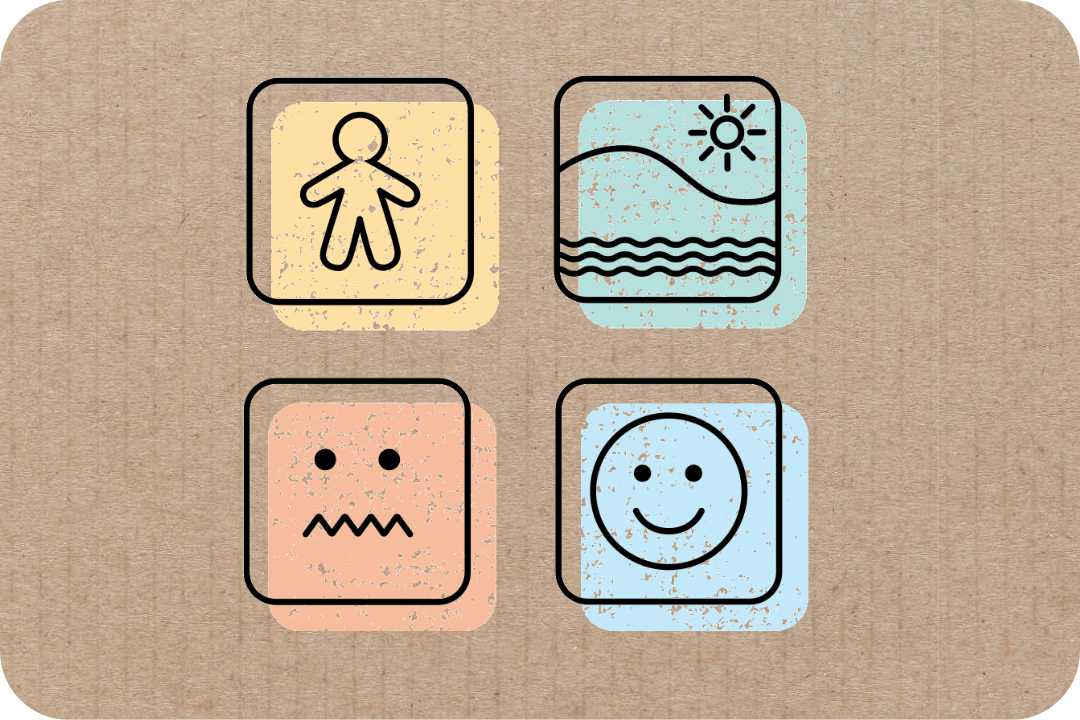
At first glance, the symbols may seem straightforward, but each design choice has been carefully considered to maximize accessibility, usability, and inclusivity. These symbols are used to represent the key elements of storytelling: character, setting, problem, and solution.
Why Black and White Line Drawings?
One of the most distinctive features of Tales Toolkit symbols is their monochrome, line-drawn style. This was a deliberate choice for several important reasons:
- Accessibility: Colourblind-friendly and easily distinguishable, ensuring all children can engage with them.
- SEND-Friendly Design: The simple, clear outlines resonate with children who use PECS (Picture Exchange Communication System) or other symbol-based communication tools.
- Versatility: Without color, the symbols remain open to interpretation and can represent multiple variations of a concept, allowing for more flexible storytelling.
Breaking Down the Tales Toolkit Symbols
Each of the four symbols represents a fundamental element of storytelling. Let’s explore each one in detail, examining the reasoning behind its design, what it can represent, and how it supports children's storytelling.
1. Character Symbol

Visual Breakdown: A gingerbread style representation of a person, with arms and legs stretched out in a neutral position.
Why This Design?
- Universality: The stick figure is one of the most universally recognized representations of a person, making it intuitive for young children.
- Inclusive: Avoids specific gender, age, or cultural attributes, allowing children to imagine the character in any way they choose.
- Flexibility: Can represent a human, an animal, or even an anthropomorphised object depending on the story context. The character is faceless so it doesn’t give away emotion.
2. Setting Symbol

Visual Breakdown: A simple scene featuring waves, hills, a small house, and the sun in the corner.
Why This Design?
- Encourages Interpretation: We tried to make it to be an obvious setting that could be different places - seaside, lake, mountains, also the house, we tried to make a generic building which could be recognised across the world. The idea that it could be interpreted by as many children as possible living in different environments.
- Simplicity in Storytelling: Children can quickly relate to common settings such as ‘home,’ ‘the outdoors,’ or ‘the seaside.’
- Engagement with Real-World Environments: Helps children visualise their story locations and build a stronger narrative.
3. Problem Symbol
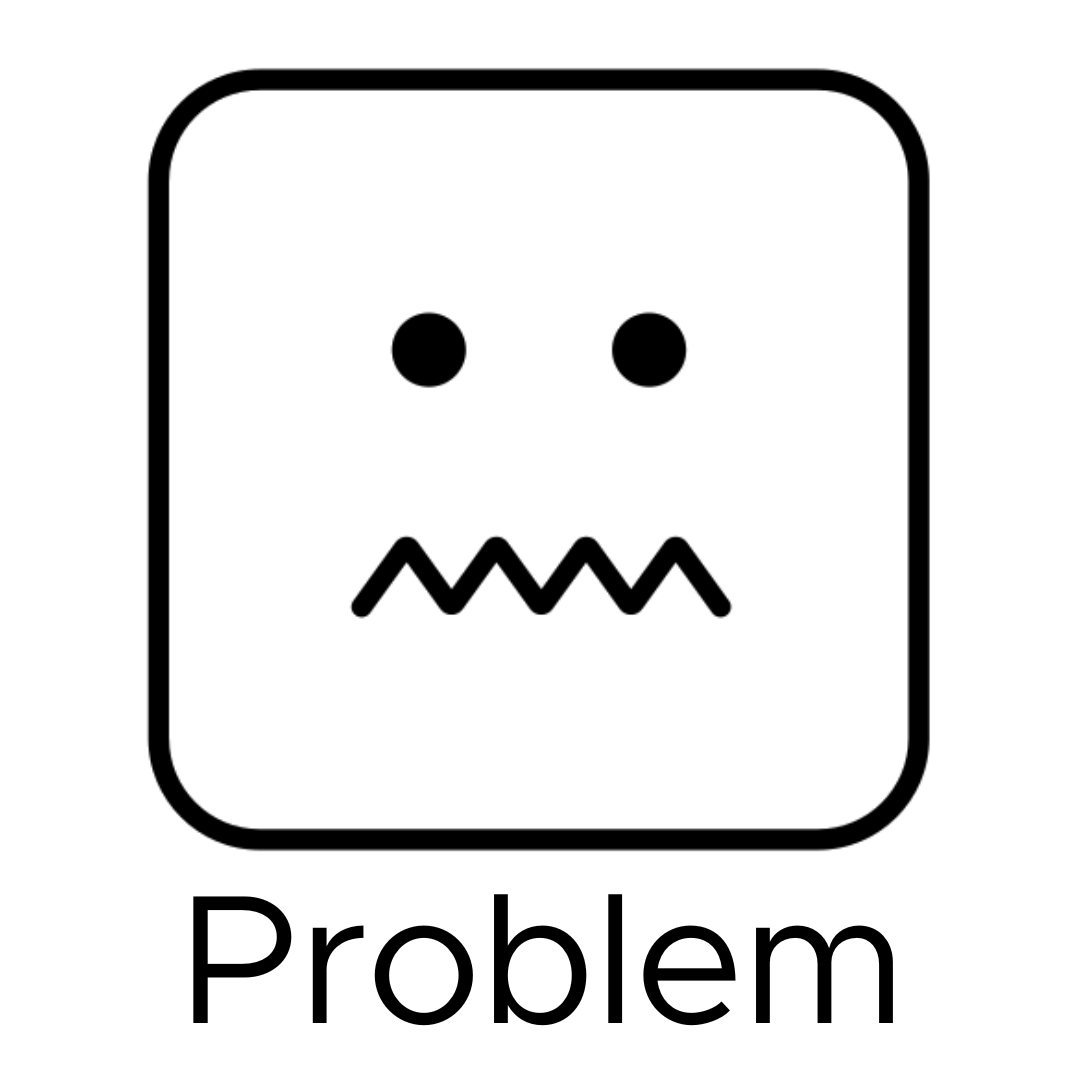
Visual Breakdown: A jagged, open-mouthed face with two dot eyes.
Why This Design?
- Emotional Recognition: The jagged lines suggest distress or chaos, representing danger, fear, or obstacles.
- Versatile Problem Representation: The ‘problem’ represents a feeling of ‘Oh no!’ rather than giving away an obvious emotion of being scared etc. This can be interpreted in different ways.
- Encourages Conflict and Resolution Thinking: Helps children introduce narrative tension, an essential element in storytelling development.
4. Solution Symbol
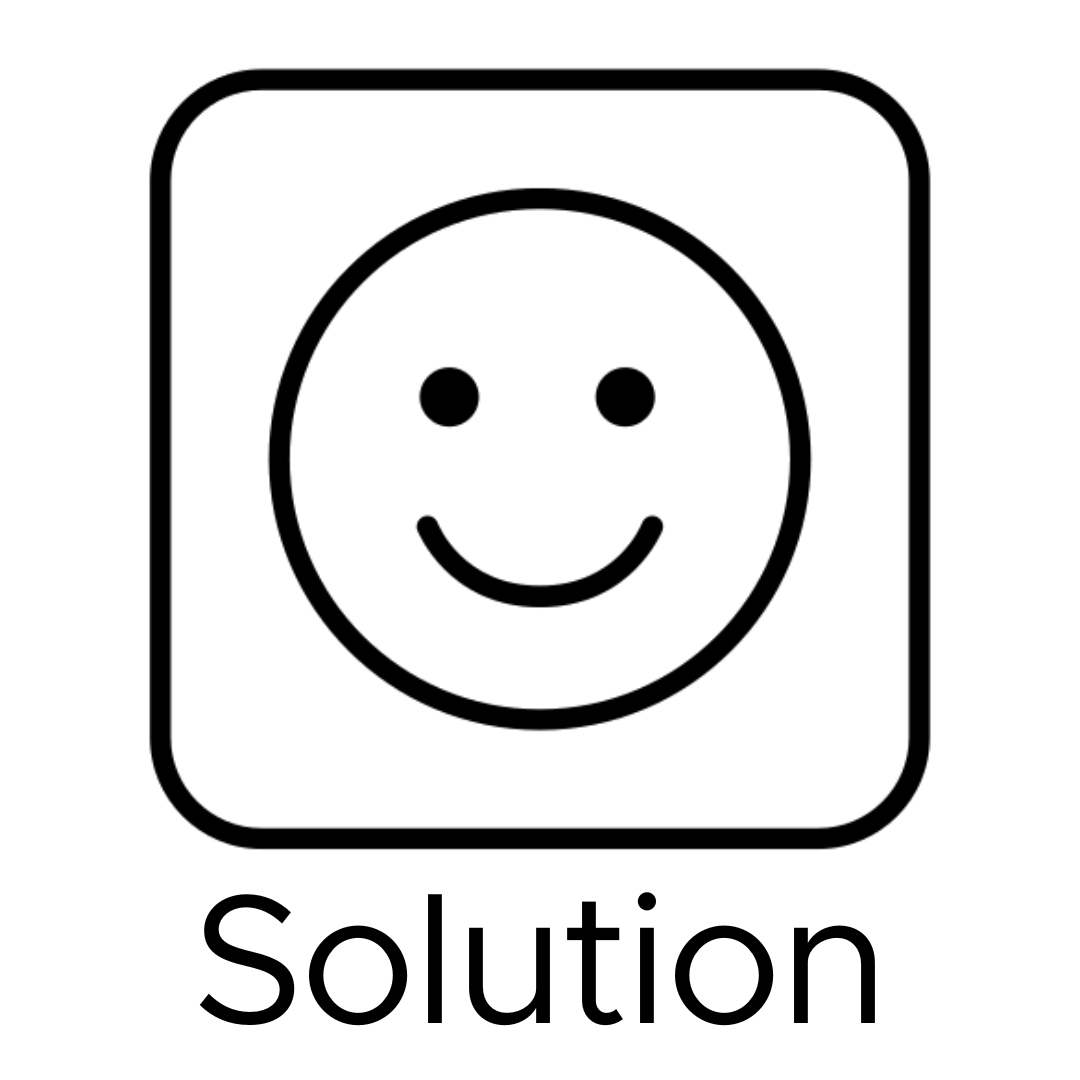
Visual Breakdown: A simple, smiling face with two dot eyes and a curved mouth.
Why This Design?
- Clear Representation of Resolution: A smiley face is something children will all recognise. It’s a commonly used symbol that the children easily associate with a happy ending.
- Encourages Positive Story Endings: Promotes emotional literacy by reinforcing the idea that challenges can be overcome.
- Universal Symbol: A smile is globally understood as a sign of success or relief.
The Evolution of the Tales Toolkit Symbols
The current versions of these symbols are the result of extensive development and refinement. When Kate first conceptualised Tales Toolkit, the symbols went through several iterations:
- Early Versions: Labelled Bags - No Symbols
The very first bags didn’t use symbols at all, and used 4 labelled bags with the words Character, Setting, Scary, Happy. The symbols themselves haven’t changed much from the hand-drawn sketches Kate used in her time as a teacher. - Feedback from Educators: Redefining the Resolution
The 4 words changed quite early on, when Kate saw that the children were bringing in “problems” that didn’t fid the title of Scary. They were bringing social and family issues like a new baby or a broken friendship. This led to changing the word “Scary” to “Problem” and “Happy” to “Solution” - Testing with Children: The Creation of the Symbols
Over time, Kate began to work with high numbers of children with SEND. She saw the opportunity to make the experience more accessible to the children and so the symbols were created. They’ve barely changed at all since Kate first hand-drew them in the setting with the children.
Why No Colour?
It might seem like adding colour to the symbols would enhance their appeal, but keeping them black and white serves several purposes:
- Avoiding Prescriptive Meanings: A green setting might imply a forest, while a blue one might suggest water. Keeping it neutral allows for more creativity.
- Supports Inclusivity: Some children, especially those with sensory processing differences, may find colour overstimulating.
The Power of Words: Why These Labels?
Each symbol is accompanied by a single-word label: Character, Setting, Problem, Solution.
- Clarity and Simplicity: These are core storytelling elements, making it easier for young children to grasp the structure of a narrative. We did a lots of research into story structure to make sure we were making the simplest version.
- Literacy Development: Reinforces key vocabulary in storytelling.
- Consistency: The words remain the same across all stories, helping children build a reliable framework for narrative creation.
- Resolution Structure: The problem is always followed by a solution to create a strong link to problem-solving dynamics. This problem-solving aspect allows for the exploration of problem-solving in real-life situations too.
-------
The Tales Toolkit symbols are more than just pictures; they are carefully crafted tools that support storytelling, language development, and creative thinking. Their design ensures accessibility, flexibility, and engagement for all children, making them a vital part of early years education.
By understanding the depth behind these simple drawings, educators and parents can fully harness their power to unlock the storytelling potential in every child.



.png)
.png)
.png)
.jpg)


.jpg)
.jpg)
.jpg)

.jpg)