.png)




.png)
.jpg)
The National Literacy Trust’s Year of Reading has been popping up everywhere recently and I really love it. It feels like such a brilliant and timely focus on children, stories, and the simple idea that reading matters deeply in childhood.
But it’s also made me think about something I can’t quite shake.
Because I wonder if, in all our focus on reading and literacy, we’re starting to lose something really fundamental. Not reading itself, but the act of storytelling as something children actively own, shape and live inside.
Early childhood is rightly being talked about more and more. Best Start in Life, Family Hubs, English Hubs supporting schools as we move into the next phase from September, all with a shared focus on giving children the strongest possible foundations in language and literacy.
And I’m writing this in the week of the phonics screening check, which always feels like a very sharp moment in the school year. There’s so much attention on decoding, fluency, and early reading outcomes at this stage, and of course those foundations matter hugely. But reading is also so much bigger than anything a check can show us.
And that’s really what keeps coming back to me.
Are we still making enough space for the thing children naturally do best?
Storytelling.
Because while we often talk about reading for pleasure, I actually think something even bigger is at risk of slipping away.
We’re not just losing reading for pleasure.
We’re losing the magic of storytelling itself.
My girl Ivy is five and completely immersed in stories. At the minute she loves Roald Dahl, The Bolds, Isadora Moon, and we read and re- read books over again. We have shelves overflowing with books. But the thing I love most isn’t even the reading itself, it’s what happens afterwards.
Because she doesn’t just hear stories.
She enters them.
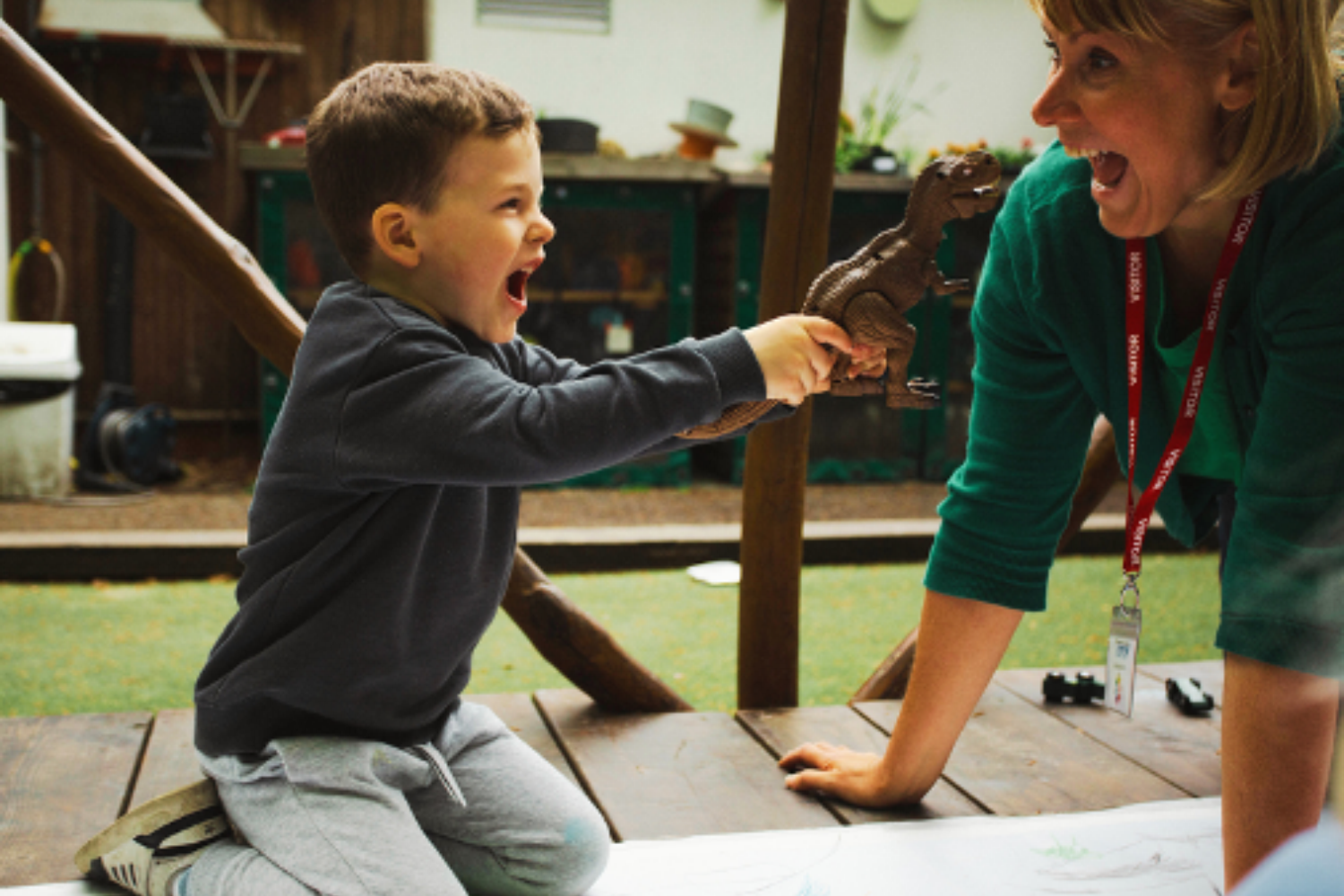
One minute she’s sat next to me on the sofa. The next she’s a vampire fairy flying round the kitchen in a blanket cape, creating entirely new adventures and adding approximately 46 extra plot lines.
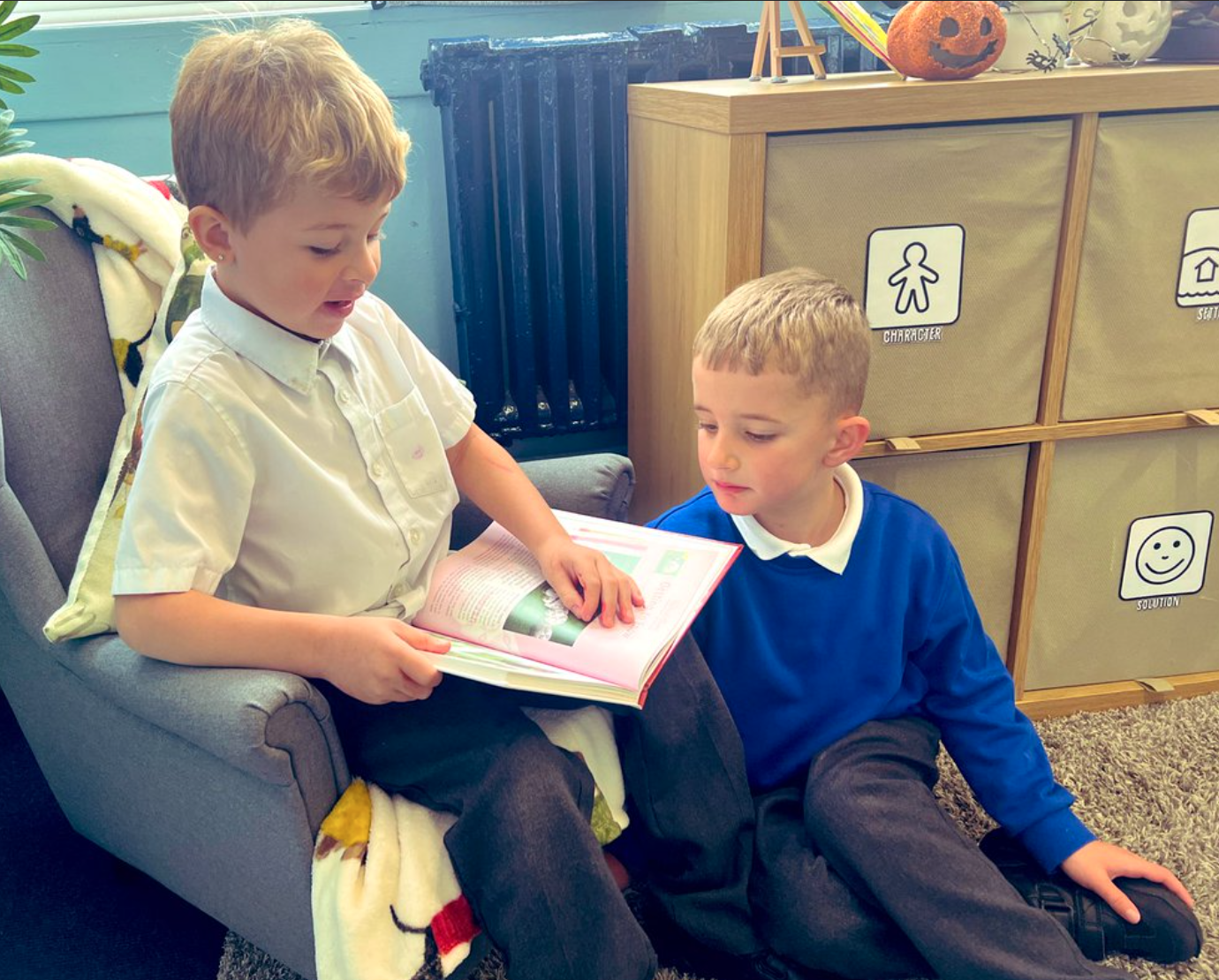
The stories don’t stop when the book closes. They spill out into role play, dressing up, drawings, made-up worlds and endless “What if…?”
And that’s what children are meant to do with stories. Stories were never supposed to stay trapped on a page.
Children process the world through storytelling. Through pretending. Through imagination. Through trying on characters and emotions and ideas.
But sometimes when I look at literacy in schools, it feels like we’re reducing something
magical into something functional.
A child can arrive at school bursting with imagination and within weeks be writing:
“Sam sat on a rug.”
“The dog is big.”
“I can hop.”
Which… yes.
Fine.
Technically.
But also not the most exciting.
And I completely understand why schools end up there. Teachers are under huge pressure. Outcomes matter. Phonics matters too. Children absolutely need to learn how to decode and read fluently. But sometimes it feels like we’ve become so focused on the mechanics of reading that we’ve forgotten why humans loved stories in the first place. Even story time can end up feeling like a mini comprehension test.
“What do you think happens next?”
“How is the character feeling?”
“What can you see in the picture?”
And look, discussion is brilliant. Of course it is. But sometimes children just need someone to read them a story. Properly read it. To sit in
the rhythm and silliness and suspense without stopping every thirty seconds for questions. Michael Rosen talks beautifully about stories being places we inhabit, not just things we analyse. And honestly, I think children understand that instinctively before adults
accidentally overcomplicate it.
.png)
Because storytelling is about so much more than books.
It’s role play.
Pretending.
Drawing maps.
Building dens and deciding there is DEFINITELY a dragon in there.
Making up ridiculous characters with impossible names.
It’s children seeing themselves not just as readers, but as storytellers.
And recently, I realised something else too.
A lot of what my girl actually wanted wasn’t just stories. It was ownership of them. Recently she’s been saying “You never play with me,” and honestly, I was thinking, what are you on about? We’ve read books, gone to museums, painted, baked, done all sorts. But eventually I realised she wasn’t asking me to do more with her, she was asking for a very
particular kind of play.
At school, so much of her play is full of negotiating other children’s ideas, trying to get herself heard and constantly stepping into everybody else’s stories, so what she was really craving at home was some space where she got to lead the story for once and have
somebody properly step into hers.
Sometimes literally fifteen minutes where she could say:
“Right. I’m the queen. You’re the king.”
“I’m Isadora. You’re the unicorn.”
“We’re going to the magical forest now.”
She wanted someone to step into her story for a bit instead of constantly having to follow everyone else’s.
And honestly, when you think about children’s lives, so much of their day is spent following somebody else’s narrative.
Sit here.
Write this.
Listen now.
Not like that.
That’s not the right answer.
Even in play, children are often negotiating everyone else’s rules and ideas. And I suddenly realised how little space we sometimes give children to direct the story themselves. To take all the ideas buzzing round their heads and actually bring them to life.
Because storytelling isn’t just entertainment.
It’s agency.
Identity.
Imagination.
Control.
And maybe that’s partly why I’ve been thinking so much recently about the kinds of stories children now immerse themselves in too.
When children dress up for World Book Day, how often are they actually dressing up as book characters? So many come as film characters, Disney princesses or TV franchises. I think something changes when stories arrive completely formed.
Recently there’s been a massive obsession at my girls' school with K-pop Demon Hunters. And what fascinated me was the way the children played it. The story seemed to have more rules from her friends. If Ivy tried to invent a new storyline, she got:
“No, that’s not what happens.”
“No, they wouldn’t do that.”
And interestingly, we’ve heard similar things from some schools working with children with SEND. For some children, changing a much loved popular culture character or taking them into a different story world can genuinely feel really uncomfortable because they’re so attached to the “correct” version of that character.
This shows just how deeply children connect with stories and characters. But it also makes me wonder what happens when stories stop feeling like magic doors and start feeling like fixed scripts.
Because children’s storytelling can be gloriously chaotic.
.png)
Cinderella could become a ninja. The Gruffalo could ride through the forest on a unicorn. A dinosaur might run a café. A fairy might fix a spaceship. Absolute narrative nonsense. Beautiful nonsense. The kind of nonsense that doesn’t just ignore rules, it transforms them.
And that transformation is where the magic lives.
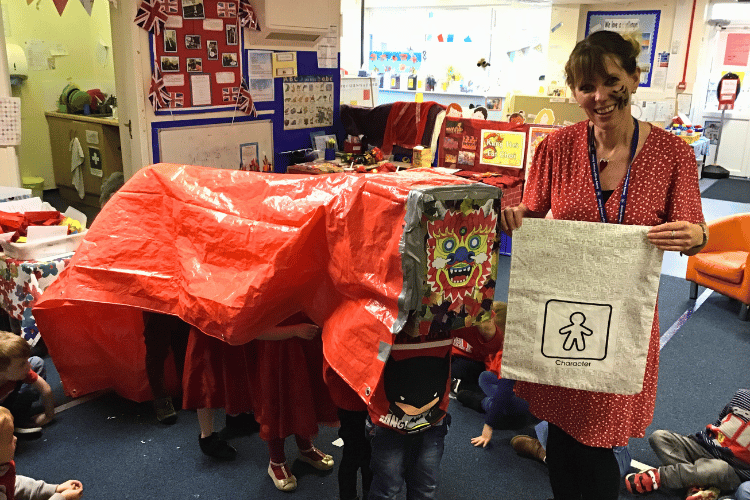
That’s one of the things I love about using Tales Toolkit. We can take the characters children already adore; Elsa, Spiderman, Rumi, whoever it is, and instead of keeping them locked inside one storyline, we open the door and let them step into something entirely new.
We let the stories breathe again.
What if Elsa got stranded on a pirate ship?
What if Spiderman had to rescue a dragon?
What if Rumi opened a bakery where the cakes could talk?
And something beautiful happens in those moments.
Children don’t hesitate. They don’t worry about whether it’s “right.” They lean in. They expand the story. They build worlds.
Because this is where storytelling becomes something more than recall or repetition. It becomes magic in action. And when playfulness with story happens, real change can begin and children see how they can relate stories to themselves.
Alongside learning to read for meaning, children also need the chance to feel something else entirely:
Imaginative ownership.
The confidence to invent.
The joy of reshaping.
The freedom to wander off script.
The ability to make magic where nothing existed before.
And maybe that’s what we’re at risk of losing.
Not just reading for pleasure.
But the belief that stories are alive.
We don’t need less rigour in literacy or to abandon phonics.
But we do desperately need more humanity inside it all.
More storytelling.
More role play.
More immersion.
More nonsense.
More wonder.
More magic.
Because when children are given permission to break stories open, they become storytellers. They become world-builders. They become people who expect that things can change.
And that might be one of the most important forms of learning we ever offer them.
Stories are not an “extra”.
They are one of the main ways children figure out who they are.
And when we protect their magic, we’re not just protecting play.
We’re protecting possibility.



.png)

.png)


.jpg)
.jpg)
.jpg)

.jpg)