



.png)
.jpg)
Storytelling features constantly in all of our lives. We use storytelling skills in almost every conversation that we have. For example, we use storytelling to talk about our holidays. We use it to explain a dramatic storyline from an episode of our favourite TV show. We use it to tell someone about a dream that we had, because we even dream in story-form, whether it makes sense or not!
Storytelling language (also referred to as narrative) typically focuses on the principles of who, where, when and what happened.
.png)
SO, WHAT IS ‘NARRATIVE’?
Quite simply, narrative is the language that we use for communication.
It is a bank of words, used in a story-like structure in everyday speech.
Narrative is a necessary tool for communicating effectively.
In Speech and Language Therapy, when a therapist talks about ‘Narrative Skills’, they are referring to a child’s ability to convey meaning to a listener with precision and clarity through expressive language.
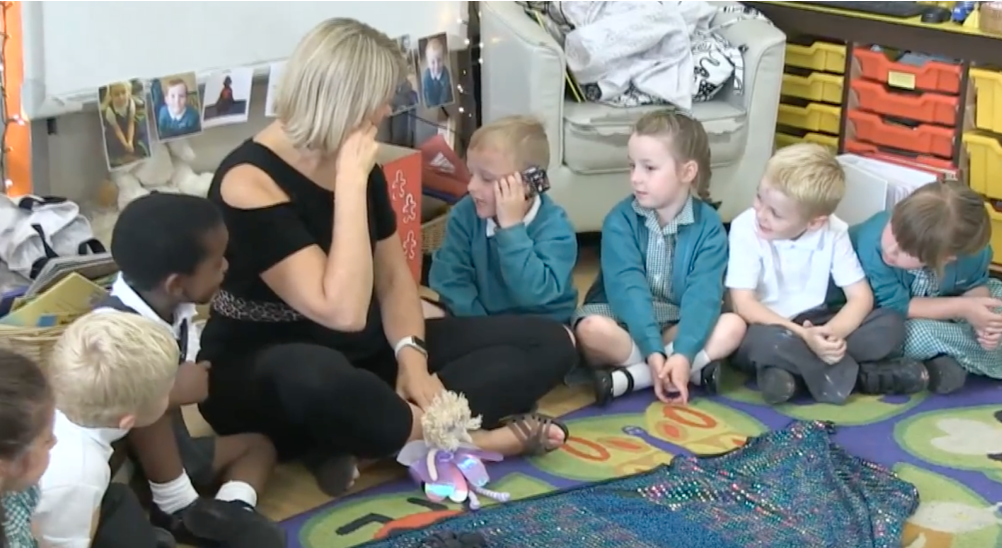
PICTURE THE SCENE: It is a Monday morning in school; all the children sit down on the carpet whilst the teacher takes the register. The teacher asks, “What did you do this weekend?” which in itself seems a simple enough question to answer. BUT for a young child, A LOT has to be in place for them to respond. A child must have a concept of the narrative components, who, where, when and what happened and they must be fully equipped with all the words that they need to use AND an understanding of those words to reply.
So, a child with developed narrative might reply, “On Saturday (when) I went to the park (where), with my Nana (who) and we fed some ducks (what happened).
OR the child might say, “Don’t know,” or “I can’t remember,” because they are just not equipped with enough language to respond.
Narrative doesn’t stop at language and communication skills; a child’s narrative knowledge transfers to all aspects of literacy learning and under-pins the skills a child requires to begin to learn in a formal setting.
THE USE OF NARRATIVE IN SPEECH AND LANGUAGE THERAPY
The Narrative Approach (written by Speech and Language Therapists, Bec Shanks and Judith Carey) uses evidence-based intervention to support speech development, by enhancing the ability to tell and understand stories.
HOW DO CHILDREN LEARN NARRATIVE SKILLS?
(Especially if they are not accessing speech therapy)
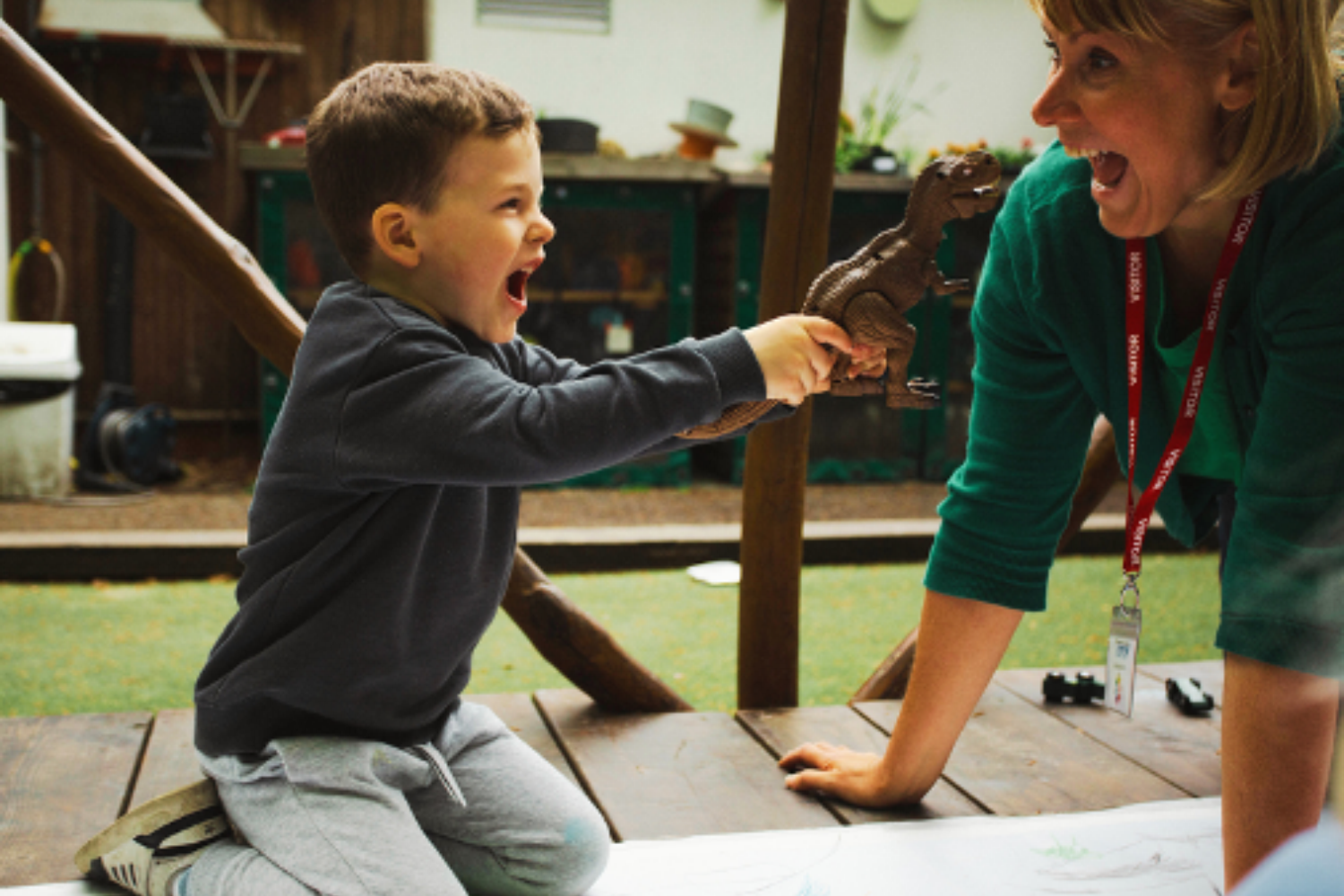
In lots of ways, this is the short answer. Children learn narrative through their adult role models (parents, carers, grandparents and teachers). They learn through their everyday experiences (going to school, the shop, a café or the park). They learn from other children (brothers, sisters, cousins and friends.) They learn from the stories they hear on TV or in a book. And really importantly, children learn through their play AND through telling their own stories.
This is where Tales Toolkit comes in.
In the classroom setting, Tales Toolkit kit really will be one of your most valuable resources when it comes to narrative development.
HOW DOES TALES TOOLKIT SUPPORT SPEECH AND LANGUAGE SKILLS?
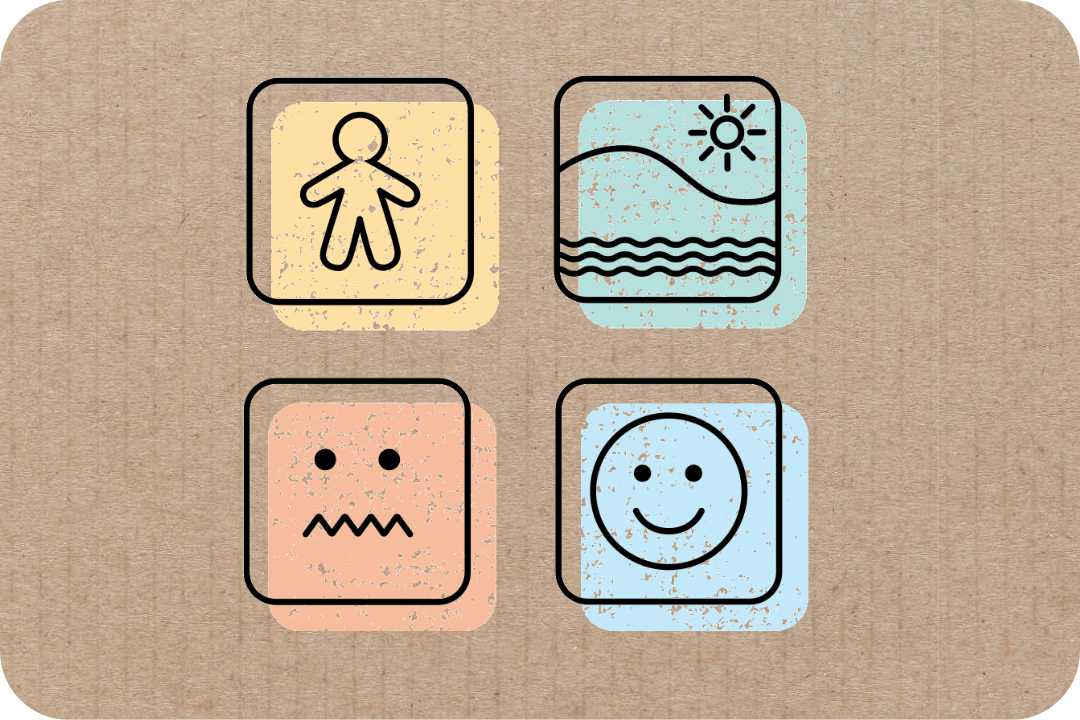
The Tales Toolkit bags are expertly created to develop and inspire children’s expressive language (narrative). The system incorporates four key components to storytelling:
Character
Setting
Problem
Solution
These components lend themselves to the core values of narrative.
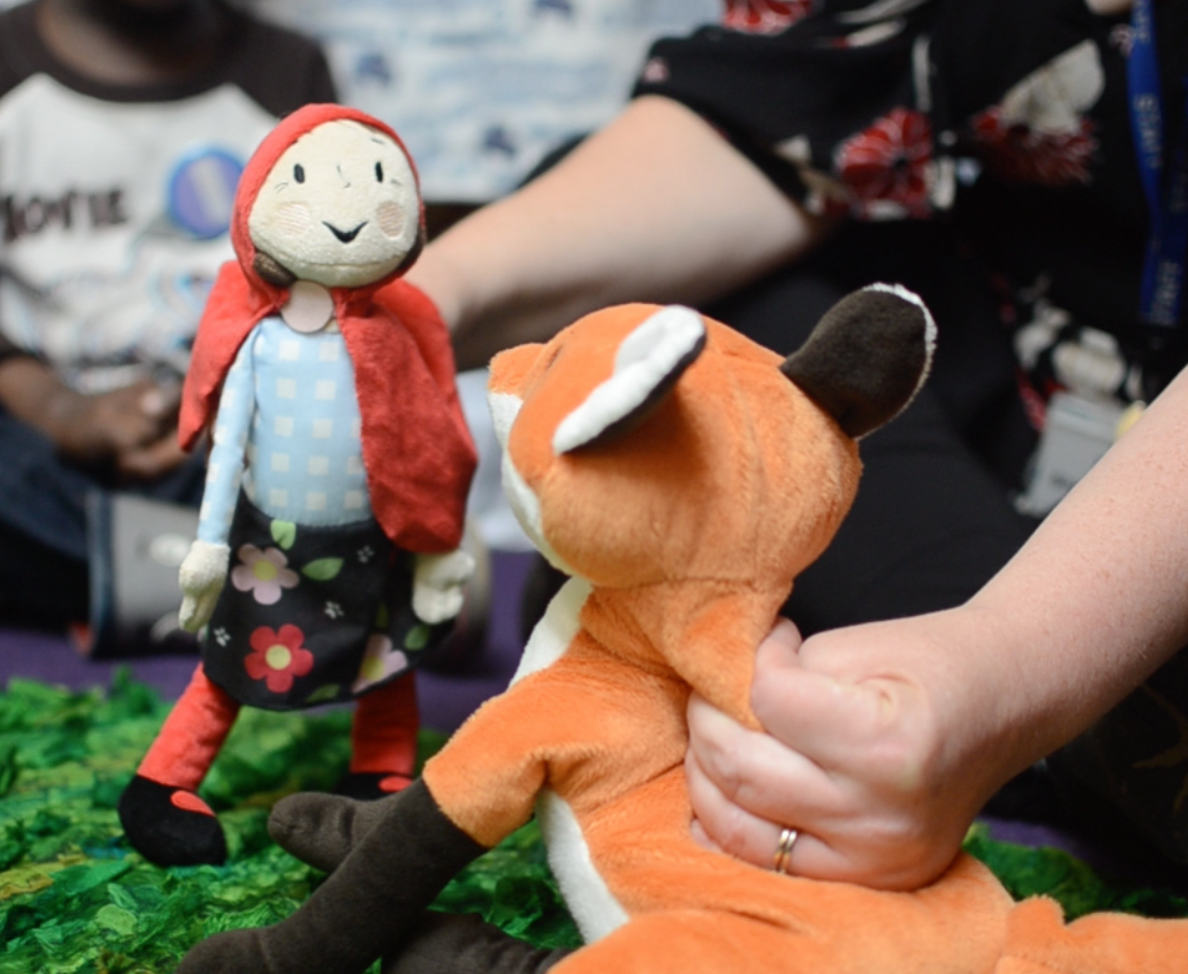
Let’s take the traditional tale of Little Red Riding Hood, as an example:
Character – Little Red Riding Hood
Setting – The Woods/Forest
Problem – The Wolf (and potentially being eaten, of course!)
Solution – The Wood Cutter (who comes and scares the wolf away.)
This story provides a child with the language opportunity to listen to and re-tell, using familiar words and phrases.
“What big eyes you have!” (Red Riding Hood)
“All the better to see you with!” (Wolf)
“What big ears you have!” (Red Riding Hood)
“All the better to hear you with!” (Wolf)
“What big teeth you have!” (Red Riding Hood)
“All the better to eat you with!” (Wolf)
But, imagine how wonderful this story becomes when children have the opportunity to transfer this story in to ‘play’ – choosing to re-tell it using different characters and props and putting a whole new spin on how it might end up (what happens next).

What if the wolf is faced with Spiderman or a pirate or wizard with a magic wand! The storytelling potential is limitless and for us as practitioners, we know that storytelling means … a child is using their narrative skills and therefore is developing their expressive language.
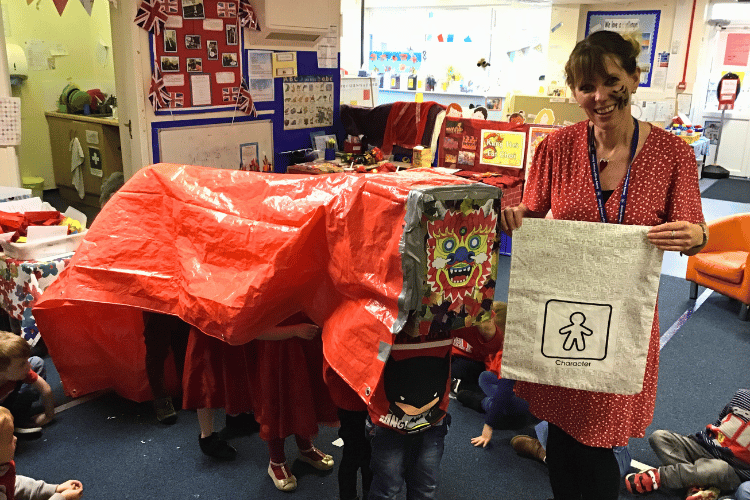
In a Tales Toolkit session, children experience all the narrative components, ‘who, where, when and what happened next,’ through play and a storytelling structure.
They are able to experiment with words, sentences and phrases.
They will experience other children’s language, they will experience a teacher modelling language AND they will be exposed to words represented by real-life, tangible objects.
The added bonus to all this story-telling, narrative and language exposure is that children can use their own experiences, imaginations and creativity, as well as build their language confidence.
‘Narrative may be the oldest and most basic human activity and is very much concerned with going over sequences of events, and giving them shape and pattern and consequently some kind of meaning and significance. This representation of experience is a marked feature of human thinking. Young children’s urge to talk about events, to recall sequences and to indulge in retelling must be nurtured as the only sound basis for literacy.”
M. Whitehead (1997) Language and Literacy in the Early Years
Sue Meikle (Meikle rhymes with Treacle) is an Early Years Educator with a specialism in early language development. Her work over the last 25 years has been centred around supporting young children’s language skills and in offering training for parents and other educators.
Sue is also a children’s author. She is passionate about storytelling!




.png)



.jpg)
.jpg)
.jpg)

.jpg)